Special Feature 1: MIRARESI - A resilience system to prepare for large-scale disasters and climate change risks.
BackgroundDisaster preparedness and Climate change measures required for condominiums
The importance of disaster preparedness in homes is increasing
In recent years, the importance of resilience—the ability to maintain residents’ daily lives even during disasters—has been increasing as society prepares for intensifying natural disasters and large-scale earthquakes. Particularly in condominiums in major metropolitan areas, local governments are now frequently recommending “sheltering in your own home” to condominium residents due to the limited capacity of evacuation centers. As a result, strengthening resilience has become an increasingly important factor for residents.
Meanwhile, climate change is considered one of the contributing factors behind the intensification of natural disasters. As an urgent global environmental issue, society's efforts toward realizing a decarbonized society are accelerating. With the strengthening of energy-saving standards for condominiums, newly built condominiums are now required to meet ZEH (Net Zero Energy House) level energy-saving performance. In addition, environmental regulations and related tax incentives are advancing, such as the mandatory installation of solar power generation and EV charging facilities in newly built residential buildings in Tokyo.
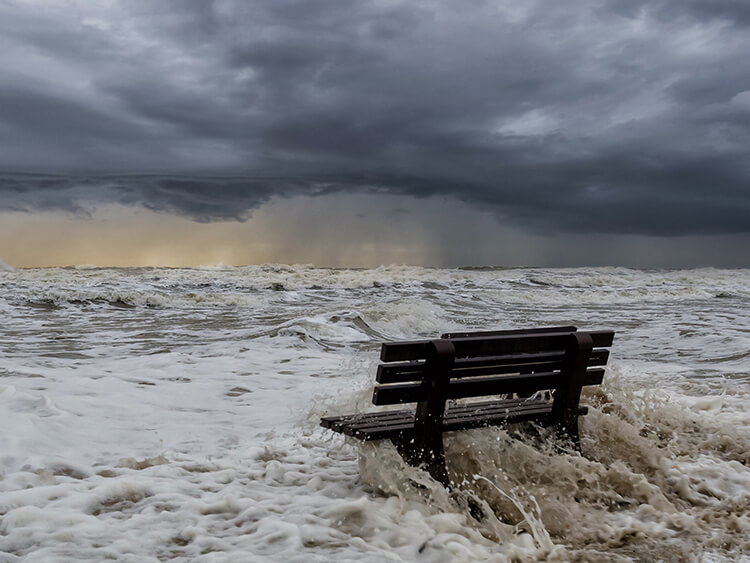 Natural Disaster
Intensification
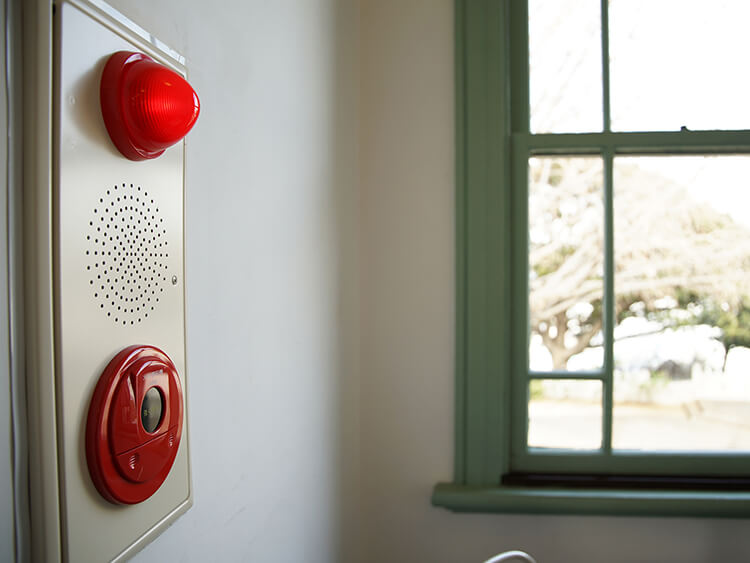 Staying in Place
Recommendation
 Decarbonized Society
Realization
Safety, security, and improved environmental performance are essential.
Against this social backdrop, the Group has been actively working to improve safety, security, and environmental performance.
One of the biggest weaknesses in condominium disaster preparedness is the “shutdown of water supply pumps” due to power outages. In high-rise residential buildings, water is supplied to each unit by a water pump. Therefore, a power outage prevents water from being delivered to individual units, making it impossible to flush toilets. In a resident survey conducted by Takara Leben in 2024, “toilet use during disasters” was the number one concern (34%) as a disaster preparedness feature within residential units. In response to this, we developed “MIRARESI,” a resilient condominium building system centered on securing “water and electricity.”
Overview A disaster-resilient condominium system “MIRARESI” equipped with solar panels and storage batteries
Supporting residents to stay in place during the evacuation
“MIRARESI” is a next-generation resilience system that equips condominiums with solar panels and storage batteries to secure water and electricity during disasters while generating economic benefits from renewable energy during normal times.
In the event of a disaster, electricity generated by solar panels is stored in batteries and used as an emergency power source, operating water supply pumps to maintain essential lifelines. Furthermore, a “MIRARESI Mission Card,” which supports initial response during a disaster, and disaster preparedness supplies are installed in each residential unit. This enhances residents’ preparedness for “sheltering in your own home” and contributes to improving disaster literacy.
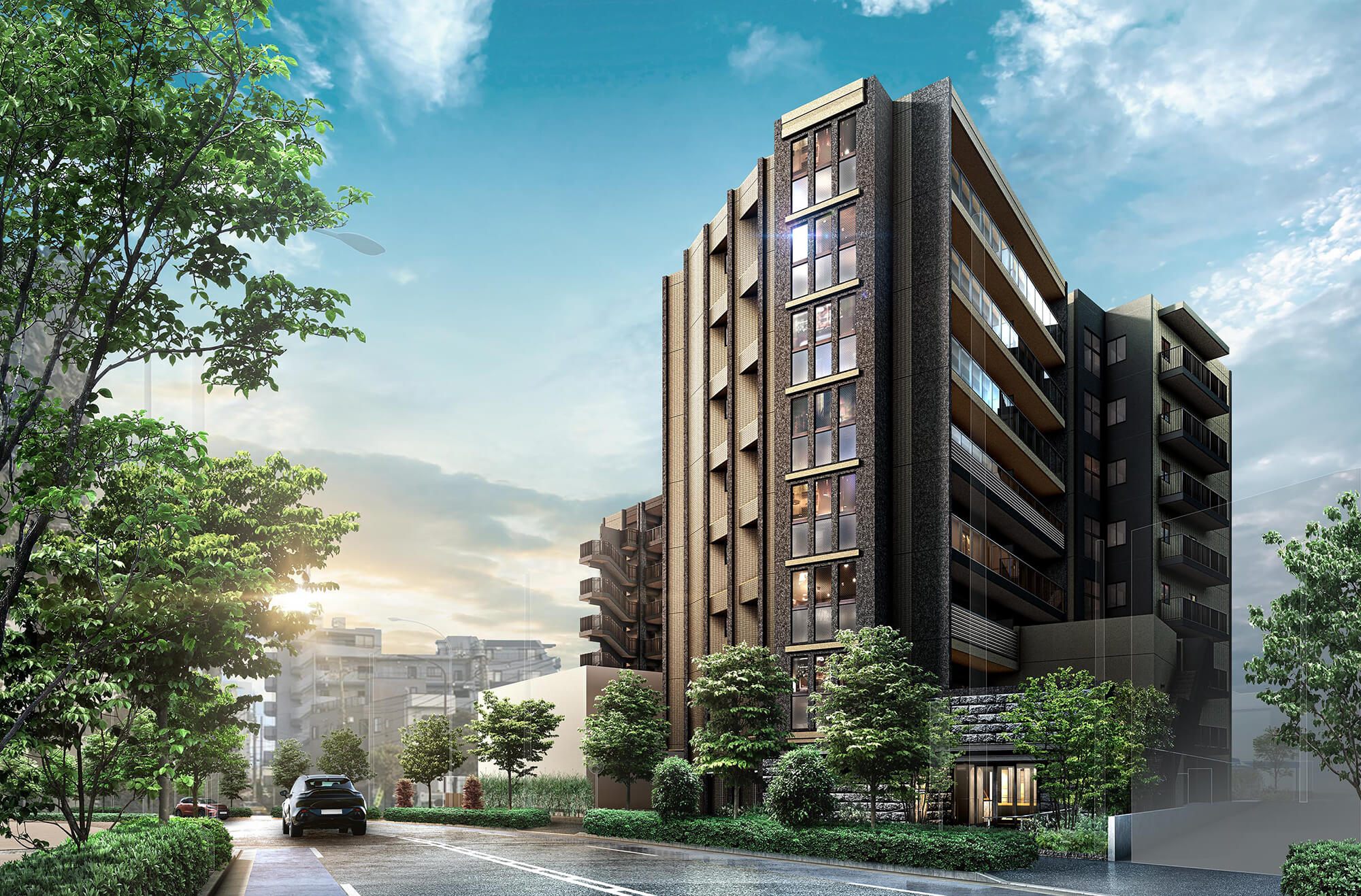
From April 2026 onward, the Group aims to make MIRARESI a standard feature in all newly built condominium projects, including the condominium brand "LEBEN" and the urban compact condominium series "NEBEL"*1. Starting with the introduction in "LEBEN HIKARIGAOKA GLOW GARDEN," which went on sale in April 2026, we are gradually rolling out this system.
- *1 Excludes heavy snowfall areas, special heavy snowfall areas, joint venture projects, redevelopment projects, and projects that do not meet certain conditions.
Key Components of MIRARESI
1. Solar power generation and battery storage systems that support essential infrastructure
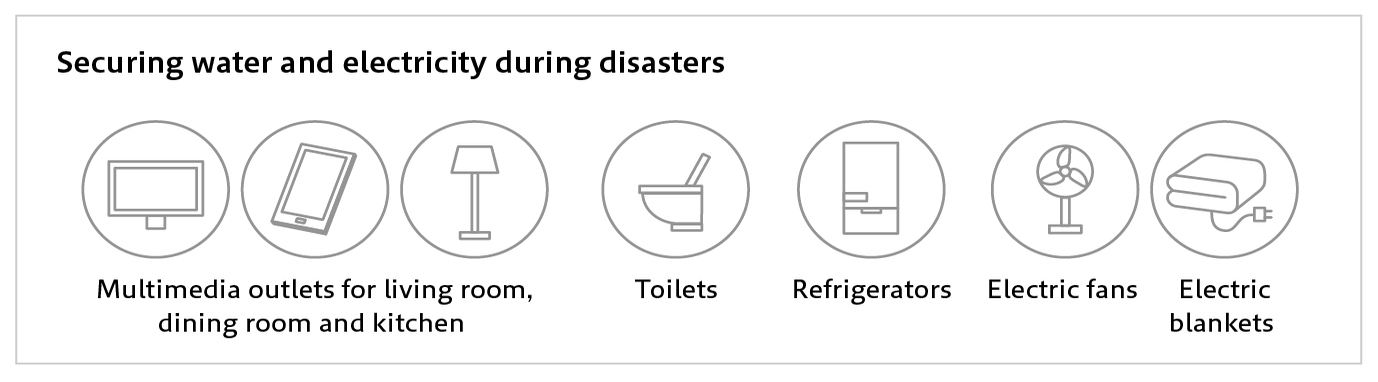
Common areas: The water supply pumps are powered by electricity stored in batteries, ensuring water supply to each residential unit and toilet use even during disasters.
Exclusive areas: By utilizing solar panels and portable storage batteries installed in each residential unit, residents can charge their smartphones and use refrigerators, lights, and other devices, even during power outages, thereby maintaining the quality of life during sheltering at home (available in select properties only).
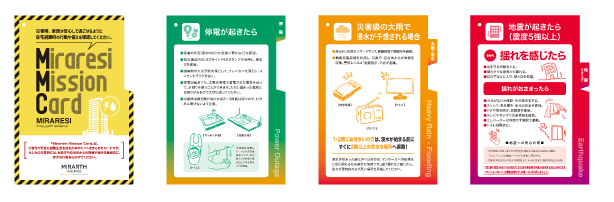
2. Disaster preparedness item supporting initial response: MIRARESI Mission Card
“MIRARESI Mission Card”*2 is a tool that visualizes “who” should do “what” depending on the type of disaster (power outages, flooding, earthquakes, etc.). The card encourages swift action during disasters by utilizing disaster preparedness equipment installed in common areas and exclusive areas.
- *2 The “MIRARESI Mission Card” is a mission card originally developed by the Company, based on the First Mission Box (Registered Trademark No.6219655) devised by Iida City, Nagano Prefecture and Nobue Kunizaki (Director of the Risk & Crisis Management Educational Institute).
3. Emergency supplies subscription service for ensuring timely replacement of stockpiles
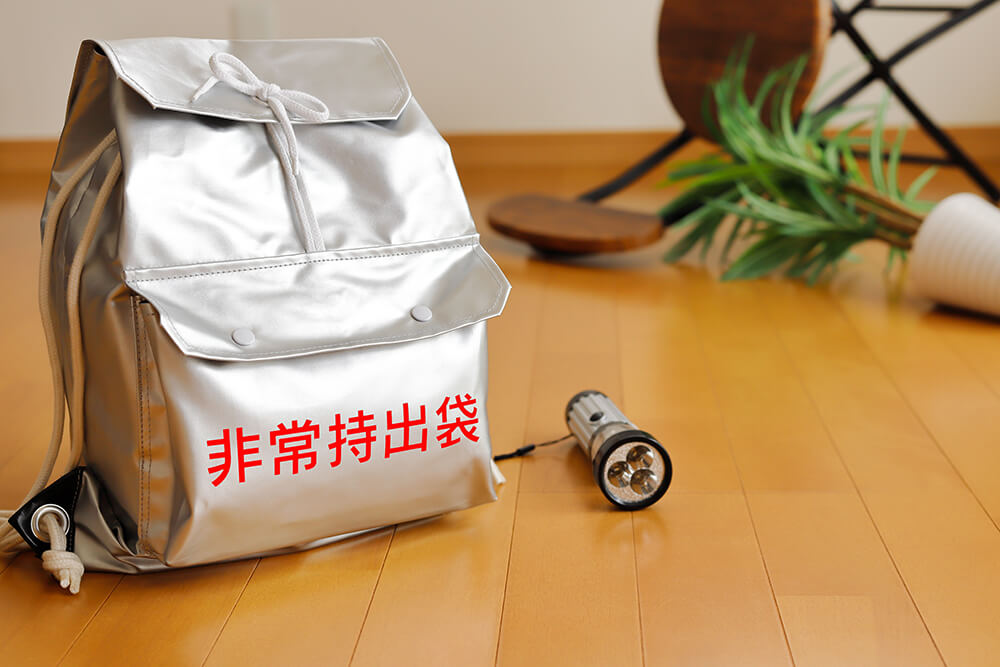
In addition to supplies that support sheltering at home, we provide the “10-Year Preparedness Subscription Service,” which helps prevent stockpiled supplies from expiring and provides families with opportunities to discuss disaster preparedness.

External recognition Received the “Minister in charge of Building National Resilience Award” at the 12th Japan Resilience Award
It is hoped that this will become standard equipment in urban apartment buildings
As MIRARESI was recognized as a resilience system enabling urban residents to take shelter at home, Takara Leben received the "Minister in charge of Building National Resilience Award" at the 12th Japan Resilience Awards hosted by the Association for Resilience Japan.
At the award ceremony held on April 12, 2026, Takao Makino, Minister in charge of Building National Resilience, stated, "This project enables toilet use and the operation of water supply pumps during power outages, as well as the provision of power supply to residents' private units through the integration of solar power generation and storage batteries, so that residents can maintain their daily lives even during disasters. We hope that these initiatives will become a standard feature for disaster preparedness equipment in urban multi-unit residential buildings."
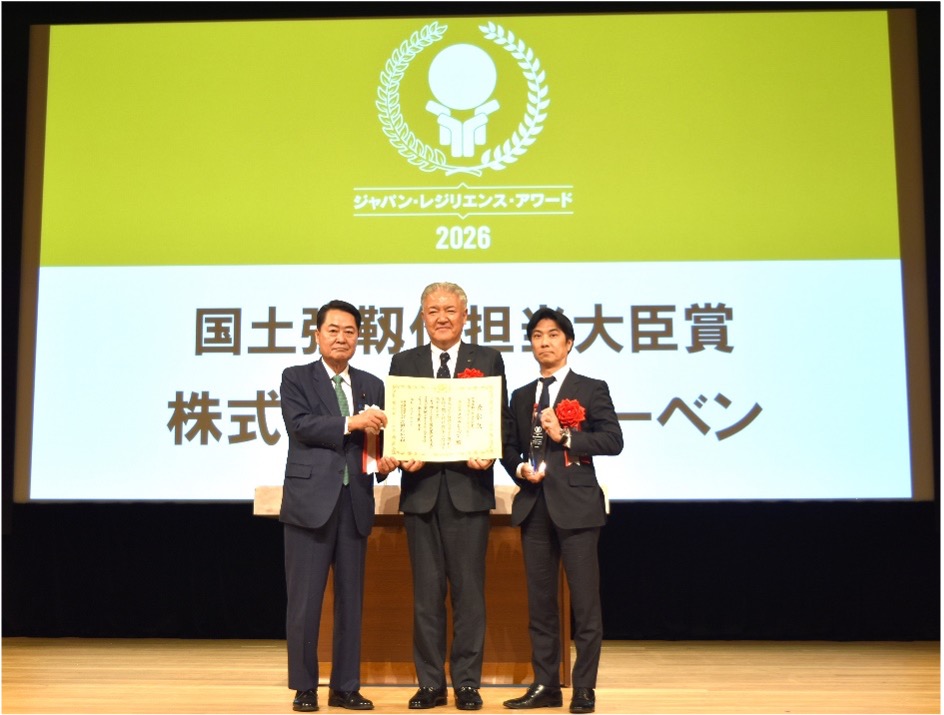
The Japan Resilience Award (Grand Prize for National Resilience) is a program that recognizes and commends pioneering companies and organizations that are working to build a resilient nation, communities, people, and industries to create a resilient society for the next generation. The award is hosted by the Association for Resilience Japan, with the aim of building a resilient nation by bringing together the wisdom of industry, academia, government, and the private sector across Japan to ensure the smooth implementation of the “Basic Plan for National Resilience,” and by creating strategies for effective utilization not only in emergencies but also in normal times, thereby maximizing the synergy between public and private investment.